Leadership.
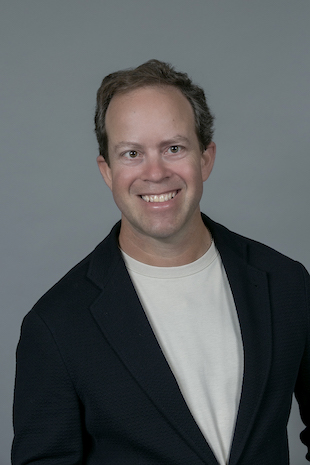
Russ Rosenzweig named Executive Director of the Institute
Russ Rosenzweig was named Executive Director of the Failure Analysis Institute in July 2026. Russ was one of the pioneers of the expert witness industry and has decades of experience helping clients understand and analyze failures and connecting them with the right experts and knowledge bases.
He founded the first expert witness search and referral firm in 1993 and led it for three decades, connecting thousands of attorneys, insurers, and companies with specialized experts. His clients have included most of the largest law firms in the United States.
Executive Director Russ Rosenzweig on why the Institute exists, its research, and how the free concierge works (9 minutes).
Read the full transcript
Lightly edited for readability.
Normally, in this modern era, we like to study and celebrate successes. So what the heck would compel us to create an organization called the Failure Analysis Institute? Why would we create a whole institute dedicated to failures?
One of the reasons is a paper that I was honored to be able to write, a research paper whose mission was to study the hundred worst engineering failures of the modern era, the 100 worst failures of our time. It was fascinating to research and write that paper, and the outcome, the takeaway, my learning from it, was startling. In 99 out of the hundred of these biggest failures of modern history, the knowledge that could have prevented the disaster already existed. And in 67 of them, it was actually written down by a named person. It was predicted, and it was predicted before it happened. And they were all overruled. I'm so fascinated by this.
My name is Russ Rosenzweig, and I am proudly the Executive Director of the Failure Analysis Institute, even though I like to think of myself as a very successful entrepreneur and business leader. I've been working for 32 years. Since college, I have been mostly focused on helping litigators find the best and most qualified expert witnesses. That's been my main line of work. Lawyers come to us and say: here's the dispute, here's the claim, help me find experts. And across the thousands of complaints, the thousands of disputes that have crossed my desk as CEO of arguably the world's first and biggest expert witness referral company, I kept noticing the same thing at the center of case after case, dispute after dispute. Something failed. It was a part, a structure, a safeguard.
I became so fascinated by that pattern that I finally commissioned the study I just quoted, the 100 worst engineering failures of the modern era. And I got to write it. It was so luxurious, because I had a whole research team helping me. The paper is here, on the Institute website. You can check it out. But I want to tell you three quick stories from it.
The first story took place in Kansas City in 1981. It was a hotel, one of my favorite hotels, the Hyatt Regency. During construction, a fabricator changed one long steel rod into two short ones. That's it. That was the only change. On paper, the two designs look almost identical, but in reality, the change doubled the load on a single connection. Three different firms each held a piece of the analysis, but nobody ran the calculation. And on a Friday evening, the walkways came down onto a crowded tea dance. 114 people died over one connection detail.
The second story, you all know. It was January 1986, and the night before Challenger launched, the booster engineers recommended against flying in the cold. Everybody knows this story now. They put it in writing. They were overruled in a 30-minute conference call, and 73 seconds after liftoff, the world watched. I watched. I was watching in elementary school. I still remember it like it was yesterday. Unbelievable. All classes were canceled so the whole school could watch on TV. And seconds after liftoff, the world watched the reason that they were right.
The third story takes place in India, in Bhopal, in 1984. Forty tons of toxic gas over a sleeping city. Not because nobody understood the chemistry, but because on that night the refrigeration was shut off, the flare tower was down and the scrubber was on standby. Every barrier between the tank and the city was out of service at the same time.
The hundred biggest failures of the modern era, 100 case files, taught us one simple thing. Catastrophe is almost never a failure of knowledge. It's a failure to get the right expertise to the right table at the right time. And that's what this institute exists to do.
We're independent. Our clients are attorneys, insurers and manufacturers. I have had the good fortune, over a 32-year career, to find and get to know nearly every expert in the failure analysis and forensic engineering world. So before you spend a dollar, what this institute offers is something that could never have existed before the AI world. We have trained an AI bot. He's so skillful, I think you're going to love it. Do not run your complicated failure analysis questions by a generic chatbot. Try ours first. We've fed it and taught it every imaginable detail about failures, and our concierge can even cite the literature and show you articles about whatever failure you're concerned about or facing. You just describe to it what failed, and it answers from the peer-reviewed literature. It will help you get to the bottom of the failure you're analyzing. And of course, its main focus is to make sure you protect the evidence.
This brings me to the one thing I hope you remember. If something fails, don't discard the part. Don't clean it up. Don't take it apart. The answer is usually still there.
So again, welcome to the Failure Analysis Institute. I hope we can be helpful to you. I've always been fascinated by this topic, this discipline, intellectually. But if you're here, then probably something has failed, and we're here to help you. Our concierge will help you get to the bottom of it. It'll help you analyze the situation, and we'll bring you the experts who will make sure that it never happens again and that you can redesign your product so that it doesn't fail. I hope you find our institute helpful. Welcome again.