Failure analysis for turbine blades. lithium batteries. sinkholes. pipeline ruptures. corrosion damage. semiconductors. bearings. composite delamination.

Where the world's most specialized knowledge of technical failures converges.

13+industries
80+research areas
300+experts
How it works

An AI-first Institute

Stop trusting generic AI models for expensive answers.

Researchers That Never Sleep

Specialist research agents read the primary sources themselves — the standards, the recall record, and the engineering literature — not summaries of them.

Get a Preliminary Diagnosis Now

Describe the failure. The AI Research Concierge answers from the Institute’s own research, not from the open web.

Talk to an Expert

Some questions need an engineer, not an article. Tell the Institute what you are facing.

get started

What failed?

Start a conversation with our AI Research Concierge trained on thousands of hours of privately held research authored by the world's top experts. Select a category to prompt the Research Concierge.

AI Research ConciergeMine our knowledge base or find an expert
Start by exploring topics to the left, or tell me what you'd like to investigate. I'll ask you a few questions so I can direct you to the best possible research or expertise.
Find an expert

Expertise Unlocked

The Institute can conduct structured AI-assisted interviews with multiple specialists across relevant disciplines, allowing you to compare perspectives before deciding how to proceed.

Who we serve

Our Industries

We serve board members, executives, attorneys, officials, and researchers across more than a dozen industries.

research report no. 1 · by russ rosenzweig, executive director

Known in Advance

A structural analysis of the one hundred worst engineering failures of the modern era, and the expertise that was never assembled.

99 of 100
The knowledge needed to prevent the disaster existed before it happened.
67 of 100
The fatal mechanism was described in writing, before the event, and overruled.
1 of 100
Genuinely beyond the knowledge of its time. Nobody knew.
read the report
news & insights

What's failing — and why it matters.

Institute analysts track high-profile failure events as they develop.
See all insights
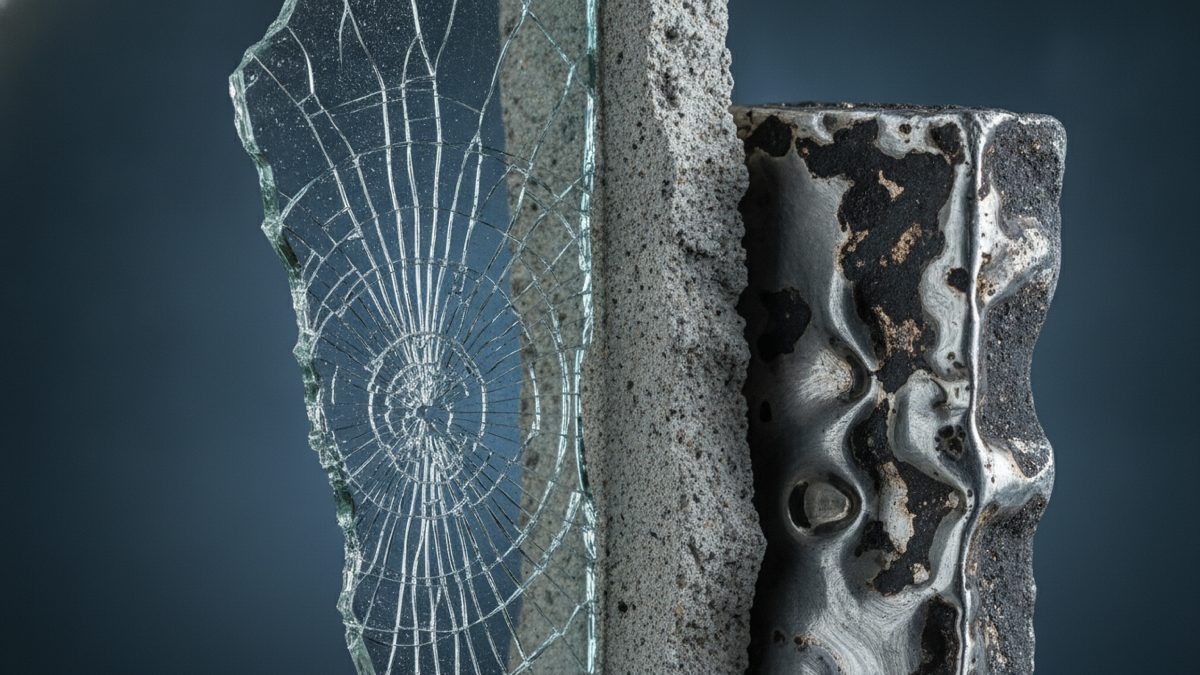
A cracked pane of glass with a spiderweb of radial and concentric fractures, a rough-edged slab of gray concrete, and a column of rippled, partly blackened silvery metal stand side by side against a dark blue-gray background.
Fire & Explosion
The burn indicators that did not survive testing
Crazed glass, spalled concrete and melted metal were once read as proof a fire burned hot and fast. When the field finally tested them, the inference did not hold.
September 15, 2026

Two upright translucent glass panels rest on a dark gray machined metal mechanism with coil springs, slots and bolt holes, the nearer panel showing a rising blue bar graph beside a cracked gauge icon and the farther, out-of-focus panel glowing with an orange bar graph and a pillared icon.
Structural & Civil
Condition rating is not capacity: what each number proves
A bridge coded Poor and a bridge that cannot carry legal loads are two different findings from two different records. The federal rules keep them apart, and so should a record review.
September 15, 2026
A small metal circuit board fitted with silver shielding boxes, white rectangular blocks, a toothed gear, a striped resistor and bent wire leads sits on the right of a dark blue-gray surface, in sharp focus against a blurred background, casting a long shadow to the left.
Accident Reconstruction
Perception-response time is a distribution, not a number
The 2.5 second figure is a highway design criterion, not a measurement of any driver. What the research actually reports, and how the physical record can bound the interval instead.
September 15, 2026
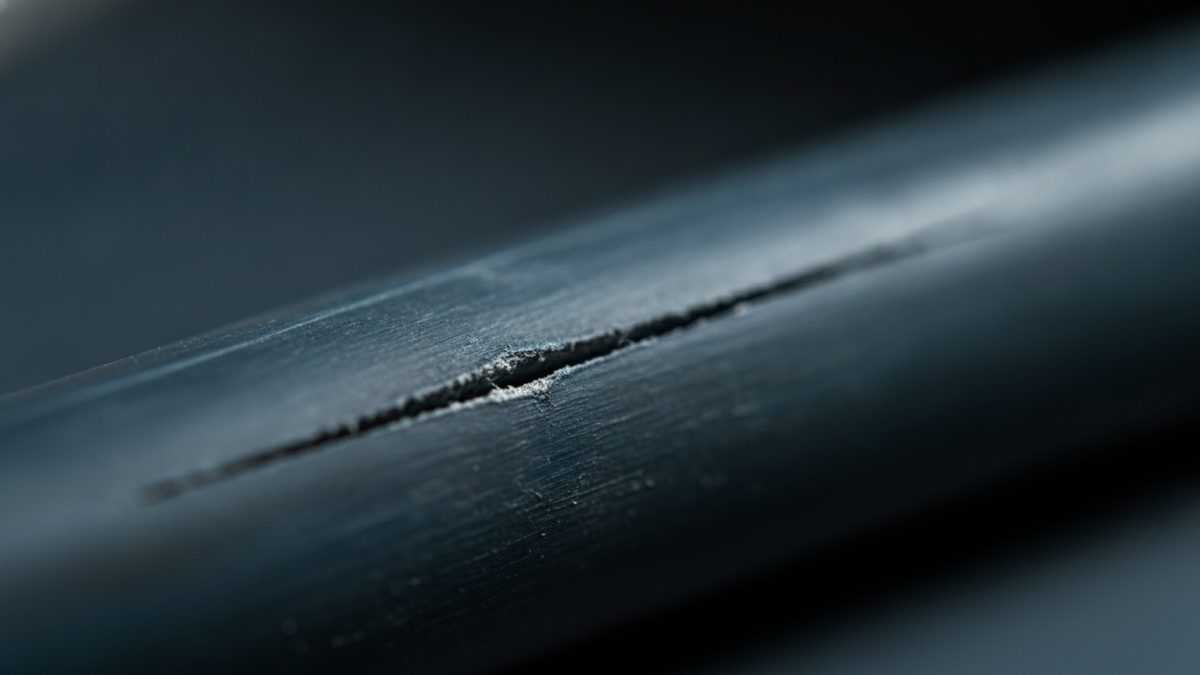
A close-up of a dark blue-gray pipe running diagonally across the frame, split along its length by a narrow slit with a small patch of pale, frayed material at one edge, fine scratches along the pipe’s surface, and the background falling away into soft blur.
Polymers, Plastics & Composites
Slow crack growth: the pipe failure that needs no surge
A split in a polyethylene pipe is read as a pressure event far more often than the evidence supports. The brittle-like slit is a years-long mechanism, and it looks nothing like a burst.
September 15, 2026
A close-up of a flat rectangular stack of layers, with two brushed gray metal plates enclosing cracked, glass-like sheets and a thin copper-colored strip, resting on a dark textured surface against a blurred blue-gray background.
Electrical, Electronics & Batteries
UL 9540A is a test method, not a certification
No listing results from UL 9540A testing, and what “passing” means changed with the sixth edition. What the report characterizes, and what it cannot be read to say about a fire.
September 15, 2026
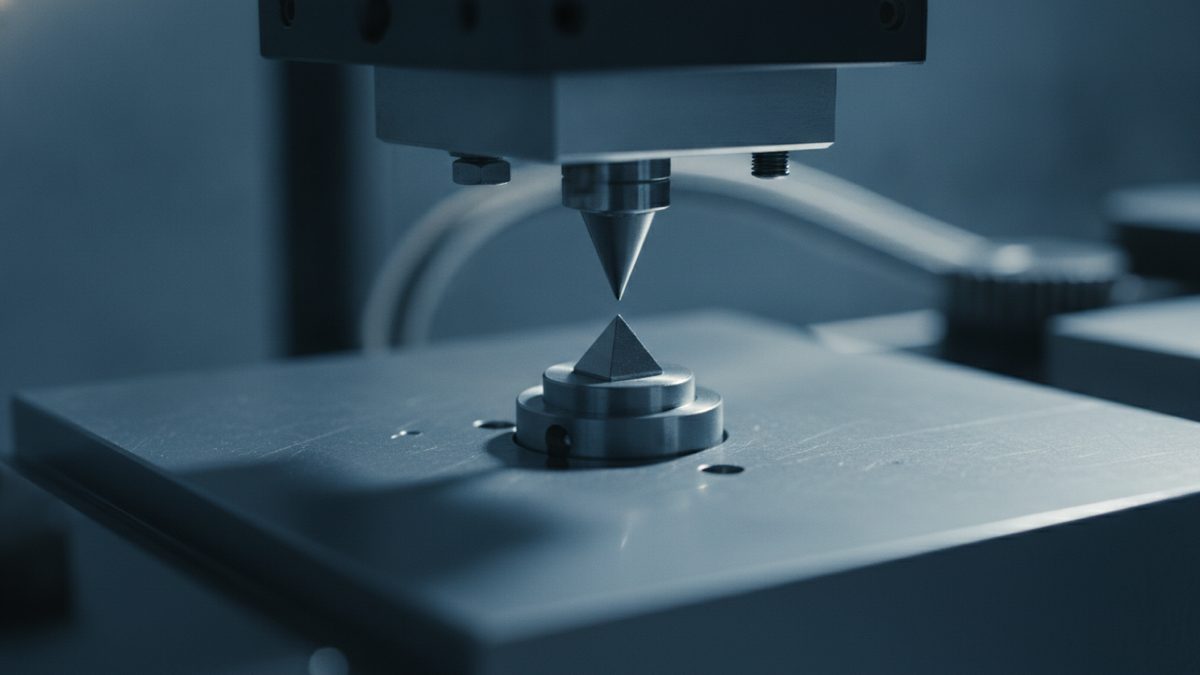
A close-up of a laboratory testing machine in cool blue-gray light, with a pointed conical indenter held just above a small pyramid-shaped piece seated on a round stepped holder in the middle of a flat, lightly scuffed metal table, cables and machine parts blurred in the background.
Materials & Metallurgical
What a hardness number can and cannot establish
Hardness is converted to strength and offered as proof a part was out of spec. The conversion standards and the published regressions both say the number will not carry that.
September 15, 2026
a brief introduction

A brief introduction from the Executive Director

Ninety seconds on why the Institute exists, who it serves, and what its free concierge will do before you spend a dollar.

Watch the full interview and read the transcript →
common questions

What counsel ask before they trust a site like this.

These come before the engineering does. If the answers are unsatisfying, nothing further down the page will help.

What does the Institute actually do?
It puts the knowledge of why things fail in one place, and makes the first hour of it free. Describe a failure and the research concierge will help you understand what the likely mechanisms are, which engineering disciplines investigate them, what evidence matters and what is at risk of being lost. Where a matter needs a retained expert, the Institute finds the right one.
Will you tell me what caused my failure?
No. Nothing here, including concierge conversations, is an opinion on cause, defect or liability. Naming the mechanisms consistent with a description is not the same as concluding which one occurred — that requires examination of the actual evidence by a qualified engineer, and it is the difference between orientation and an opinion.
How is the Institute paid?
The research assistance is free and stays free. When a matter requires a retained expert — for an examination, an advisory engagement or testimony — the Institute arranges the engagement through its expert network and is compensated for that work. That is the entire business model, and we publish it because visitors who cross-examine people for a living should not have to guess.
The evidence is about to be moved or repaired. Does that matter?
Enormously, and it is the most urgent thing on this page. Physical evidence is perishable in a way documents are not: fracture surfaces corrode, components get cleaned, scenes are cleared and equipment is repaired or scrapped in the ordinary course. Once altered, the analysis that would have been possible is often simply gone. If anything is scheduled to be moved, repaired or discarded, raise it immediately.
How often was a failure genuinely unforeseeable?
Rarely, on the Institute’s own research. A structural analysis of the hundred worst engineering failures of the modern era found that in 99 of 100, the knowledge needed to prevent the disaster already existed before it happened; in 67, the fatal mechanism had been described in writing beforehand and overruled. One was genuinely beyond the knowledge of its time. The recurring failure is not of engineering knowledge but of assembling it.
Which side do you work for?
Both, matter by matter. The Institute serves plaintiff and defense counsel, insurers and insureds, manufacturers and owners. Physics does not change according to who asked, and an institution that only ever reached conclusions convenient to one side would not be worth consulting from either.

Something failed. Find out why.

Tell us what happened. We'll triage it and connect you with the right expert — usually within one business day.

talk to an expert
AI Research ConciergeMine our knowledge base or find an expert
Tell me what failed and I'll help scope it — the likely mechanisms, what's at stake, and which expert fits. I won't give the formal analysis here.